Education
Promoting equitable access to quality education and learning opportunities for children and youth.

Community Development Center Nepal (CDC Nepal) is a non-governmental, non-profit organization committed to fostering sustainable development and empowering rural and marginalized communities in Nepal. Established in 2081 B.S. (2025 A.D.), CDC Nepal is officially registered with the District Administration Office, Surkhet, and affiliated with the Social Welfare Council under the Social Welfare Act of Nepal.
Operating primarily in Surkhet and surrounding districts, CDC Nepal addresses the socio-economic challenges faced by marginalized, vulnerable, and disaster-affected populations across the country. Our work is guided by an integrated and participatory approach that promotes local ownership, dignity, inclusion, and long-term change.
Participatory, inclusive, community-owned, and built for sustainable long-term impact.
Women, children, marginalized groups, and communities affected by poverty and disasters.
Promoting equitable access to quality education and learning opportunities for children and youth.
Enhancing community health through awareness, services, WASH initiatives, and nutrition support.
Strengthening income-generating opportunities and improving economic resilience for vulnerable families.
Promoting productive, sustainable farming practices, food security, and agricultural innovation.
Encouraging environmental protection, climate action, and responsible natural resource management.
Building resilient communities through preparedness, mitigation, response, and climate adaptation initiatives.
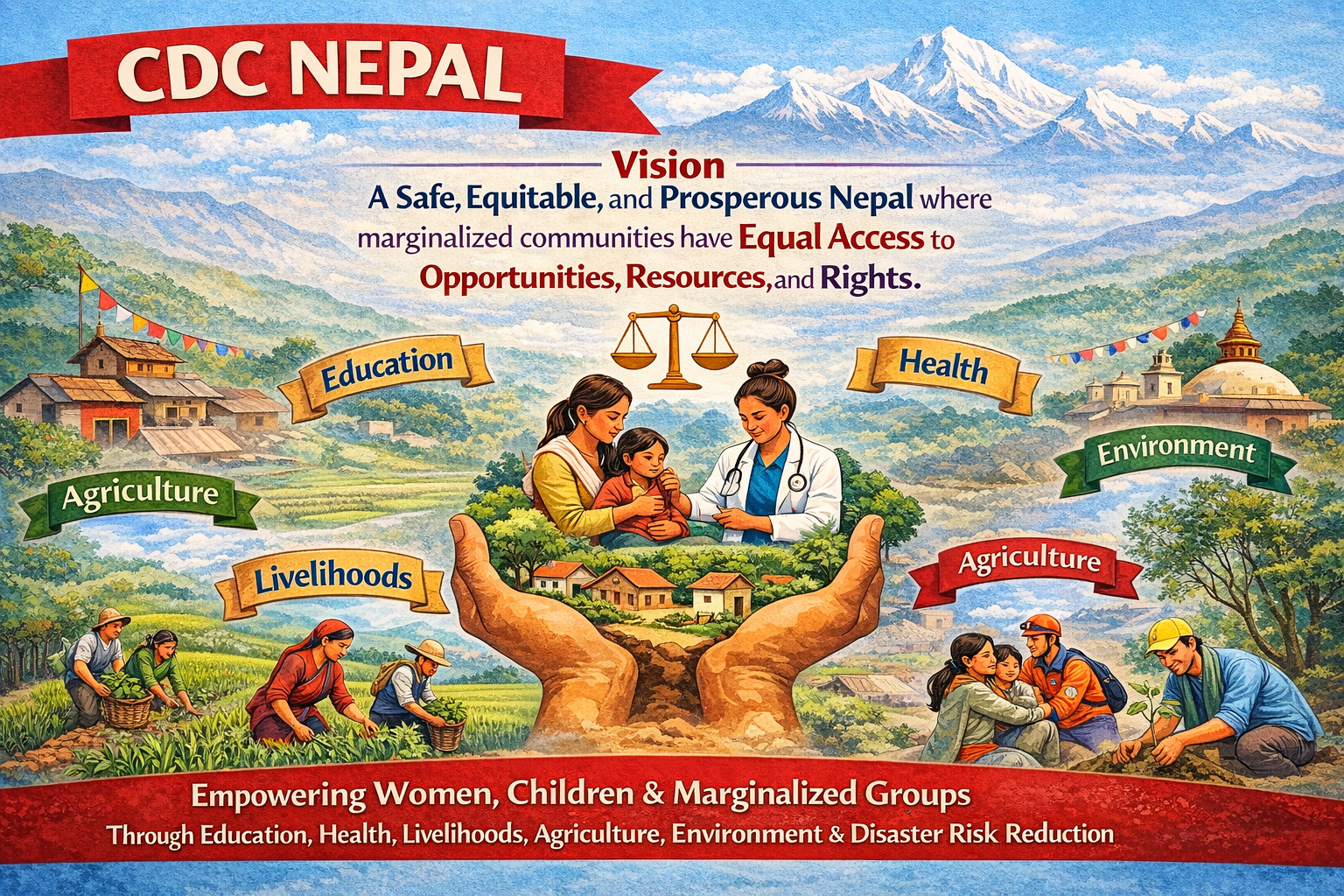
Where marginalized communities have equal access to opportunities, resources, and rights.
To foster sustainable community development through participatory programs in education, health, livelihoods, agriculture, environment, and disaster risk reduction, with a particular focus on women, children, and marginalized groups.
Enhance access to quality education for children and youth, particularly from marginalized communities.
Advance healthcare access, WASH initiatives, and nutrition programs to strengthen community wellbeing.
Support income generation, agricultural innovation, and economic empowerment for vulnerable households.
Strengthen community resilience to disasters through proactive risk reduction and climate adaptation strategies.
Advocate for gender equality, social inclusion, child protection, and equitable access to rights and resources.
To empower marginalized communities—particularly women, children, and disadvantaged groups— through inclusive, participatory, and sustainable programs in education, health, livelihoods, agriculture, environment, and disaster risk reduction, ensuring equitable access to resources, opportunities, and rights.
CDC Nepal is a non-governmental, non-profit organization working to empower communities through programs in education, health, livelihoods, agriculture, environment, and disaster risk reduction.
CDC Nepal primarily operates in Surkhet and surrounding districts, while aiming to support vulnerable communities across Nepal.
Our initiatives focus especially on women, children, marginalized groups, and communities facing poverty, exclusion, and disaster-related risks.
We work in education, health, sustainable livelihoods, agriculture, environment, and disaster risk reduction and management.
Support can come through partnerships, volunteering, donations, collaborative projects, advocacy, and community-based engagement initiatives.